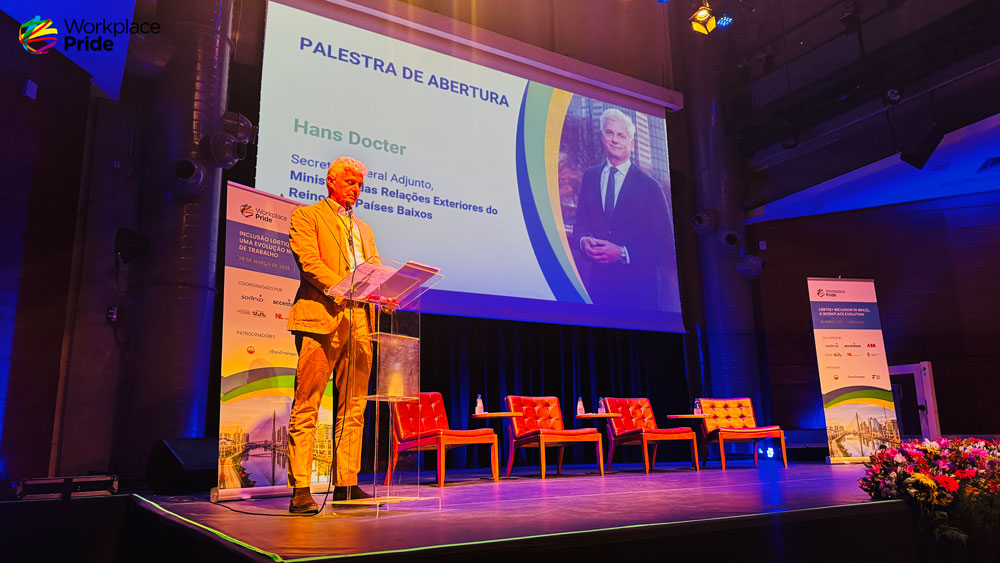
There were 4 breakout sessions. The Business Case and Measuring Success for LGBTIQ+ Inclusion. Moderated by Yuli Kim and featuring Luciano Nassif, the session explored how organisations in Brazil are defining and tracking meaningful KPIs, while sharing practical steps for both employers and community stakeholders.
Implementing Trans-Inclusive Policies and Practices. The session highlighted real-life case studies and honest reflections on what works—and what doesn’t—when building trans-inclusive workplaces in Brazil.
Leveraging Allies and Role Models for More Progress, led by Fernando Costa, Sodexo, focused on the critical role allies and visible role models play in accelerating inclusion. The discussion emphasized how organizations can move from intention to action by embedding allyship into their broader LGBTIQ+ strategies.
Connecting Business to Civil Society in the Brazilian Cultural Context, featuring Gui Mohallem, Executive Director VoteLGBT. The session underscored the importance of collaboration between companies and civil society, offering practical insights and tools to strengthen partnerships and drive meaningful, community-led impact.
Diplomatic representatives, including Wieneke Vullings, Consul General of the Kingdom of the Netherlands, Valentine Mangez, Consule Generale de Belgique a Sao Paolo, and Robert Jackson, Consul General Ireland, emphasised that while technology and AI will continue to evolve, human connection, empathy, and dialogue remain essential to productive and inclusive workplaces.
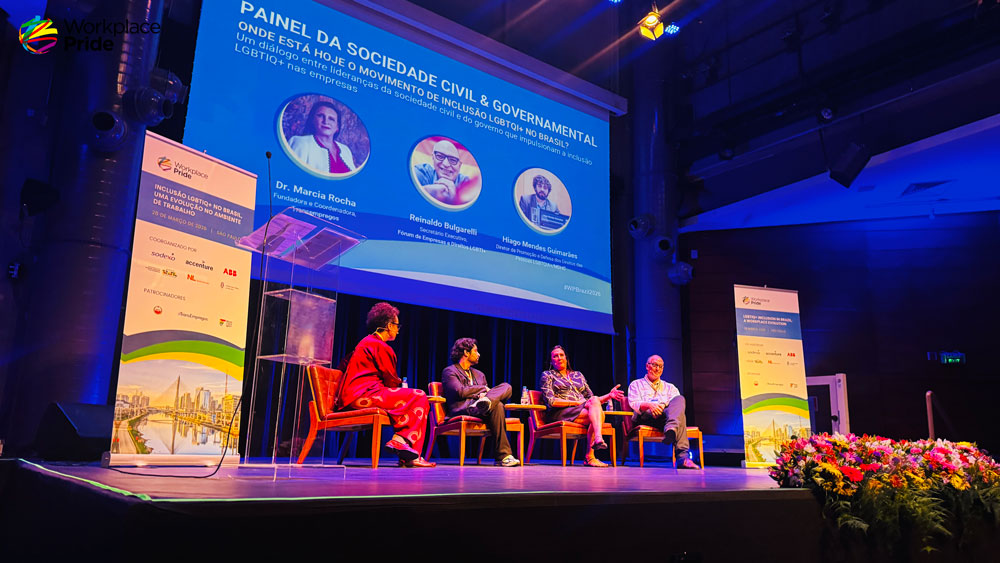
Hiago Mendes Guimarães, Director Secretariat for the Promotion and Defence of the Rights of LGBTQIA+ People Brazil, Márcia Rocha, Transempregos and Reinaldo Bulgarelli, Fórum de Empresas e Direitos LGBTI+
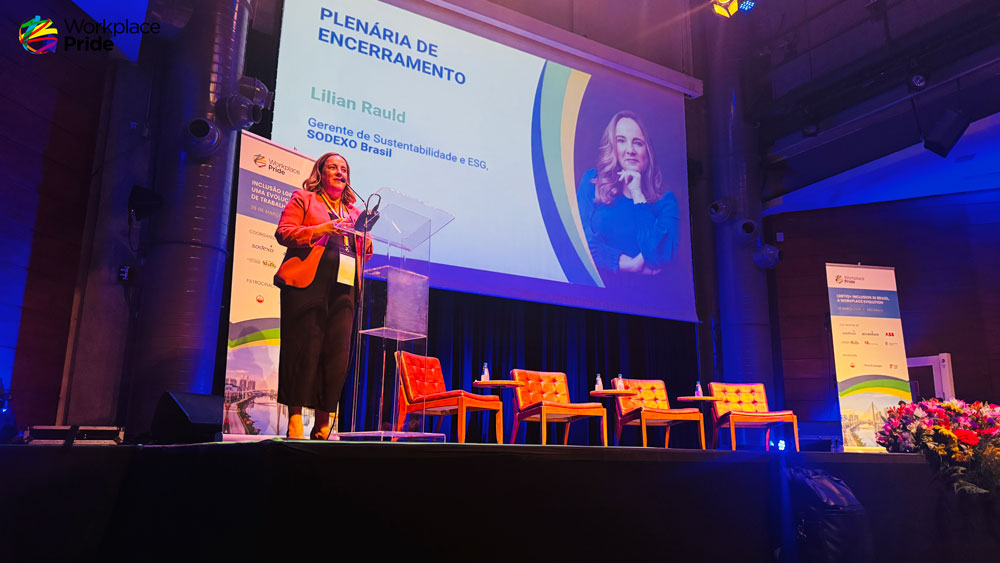
In closing, Lilian Rauld, Leading the Sustainability and ESG Transformation at Sodexo, a clear message to leaders: inclusion must move beyond statements to measurable action, grounded in respect, accountability, and continuous dialogue.
The event was co-hosted by Sodexo, Accenture, ABB, alongside the Secretariat for the Promotion and Defence of the Rights of LGBTQIA+ People and the Netherlands and Belgian Consulates in Brazil. It was supported by The HEINEKEN Company / Amstel Beer, Eaton, Transempregos, and Fórum de Empresas e Direitos LGBTI+.
Special thanks were extended to the Unibes Cultural team, volunteers, and Pinguim Pictures, whose support ensured the smooth delivery of the event despite weather disruptions.
This conference marks a powerful beginning — and a clear call for organisations to move faster, act decisively, and close the gap between intention and impact.