Bringing together international researchers, practitioners and community voices, the symposium celebrated a decade of research and collaboration while exploring the future of LGBTIQ+ inclusion in the workplace.
On 24 November 2026, Leiden University celebrated the 10th anniversary of the Chair in LGBTIQ+ Workplace Inclusion with an international symposium bringing together leading researchers, practitioners and community representatives to reflect on progress, share new research and discuss the future of workplace inclusion.
Organised by Prof. dr. Jojanneke van der Toorn in collaboration with Workplace Pride, including Academia@Workplace Pride and POC@Workplace Pride, the symposium marked an important milestone in a decade of research, knowledge exchange and collaboration dedicated to advancing inclusive workplaces.
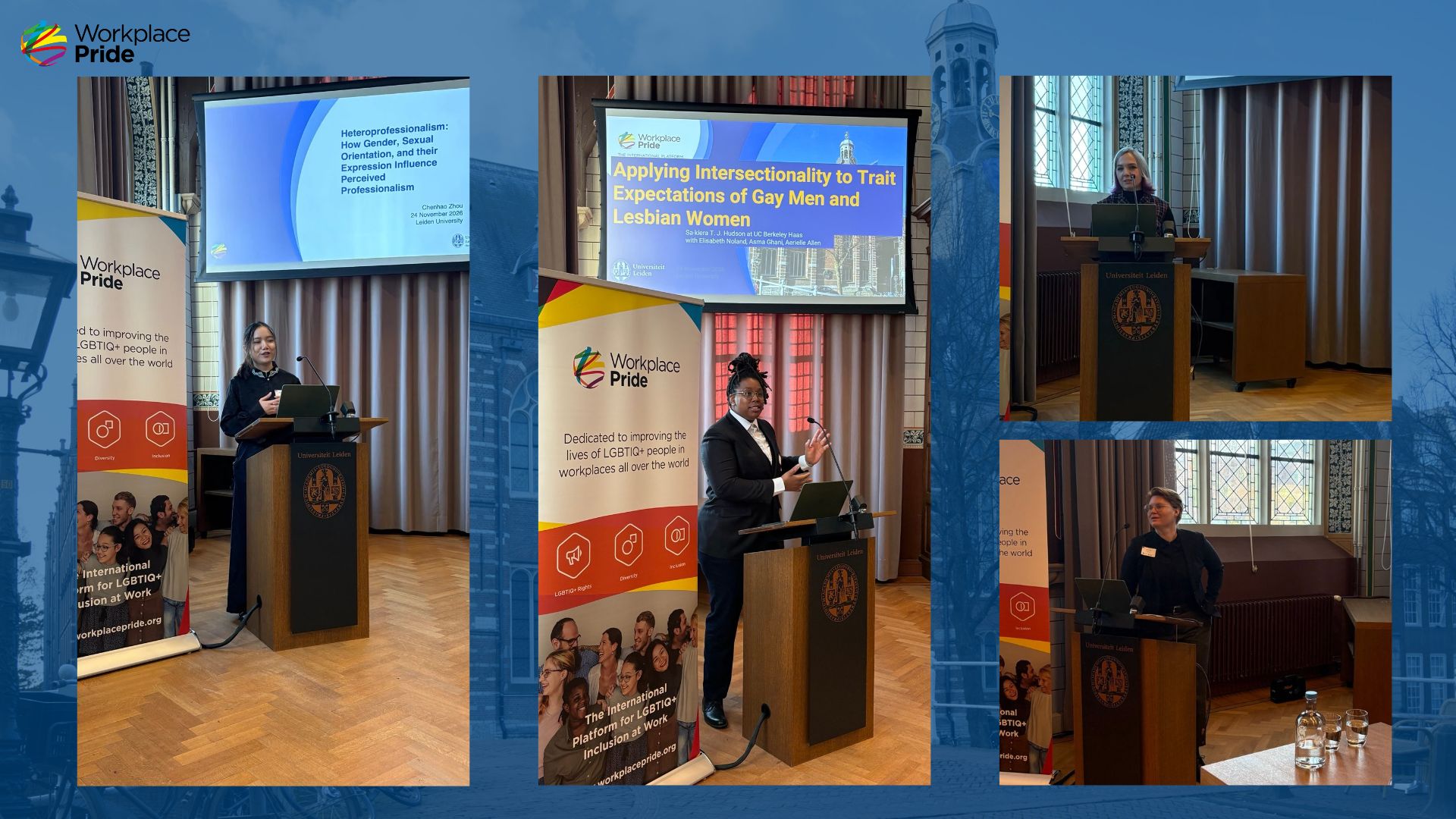
Hosted at Leiden University’s Academy Building, with plenary sessions also accessible via livestream, the event welcomed participants from universities and organisations across Europe and the United States.
Bringing research and practice together
Throughout the day, researchers presented their latest findings on a broad range of topics related to LGBTIQ+ workplace inclusion. Discussions explored workplace discrimination and stereotypes, perceptions of professionalism, identity-safe work environments, diversity and inclusion branding, allyship and the experiences of queer researchers.
Together, these contributions demonstrated both the richness of this growing research field and the importance of continuing to examine how sexual orientation, gender identity, gender expression and sex characteristics shape people’s experiences at work.
A recurring message was that inclusion goes beyond formal policies and public commitments. It is ultimately reflected in people’s everyday experiences, opportunities and ability to participate and be themselves without fear of exclusion.
Putting intersectionality into practice
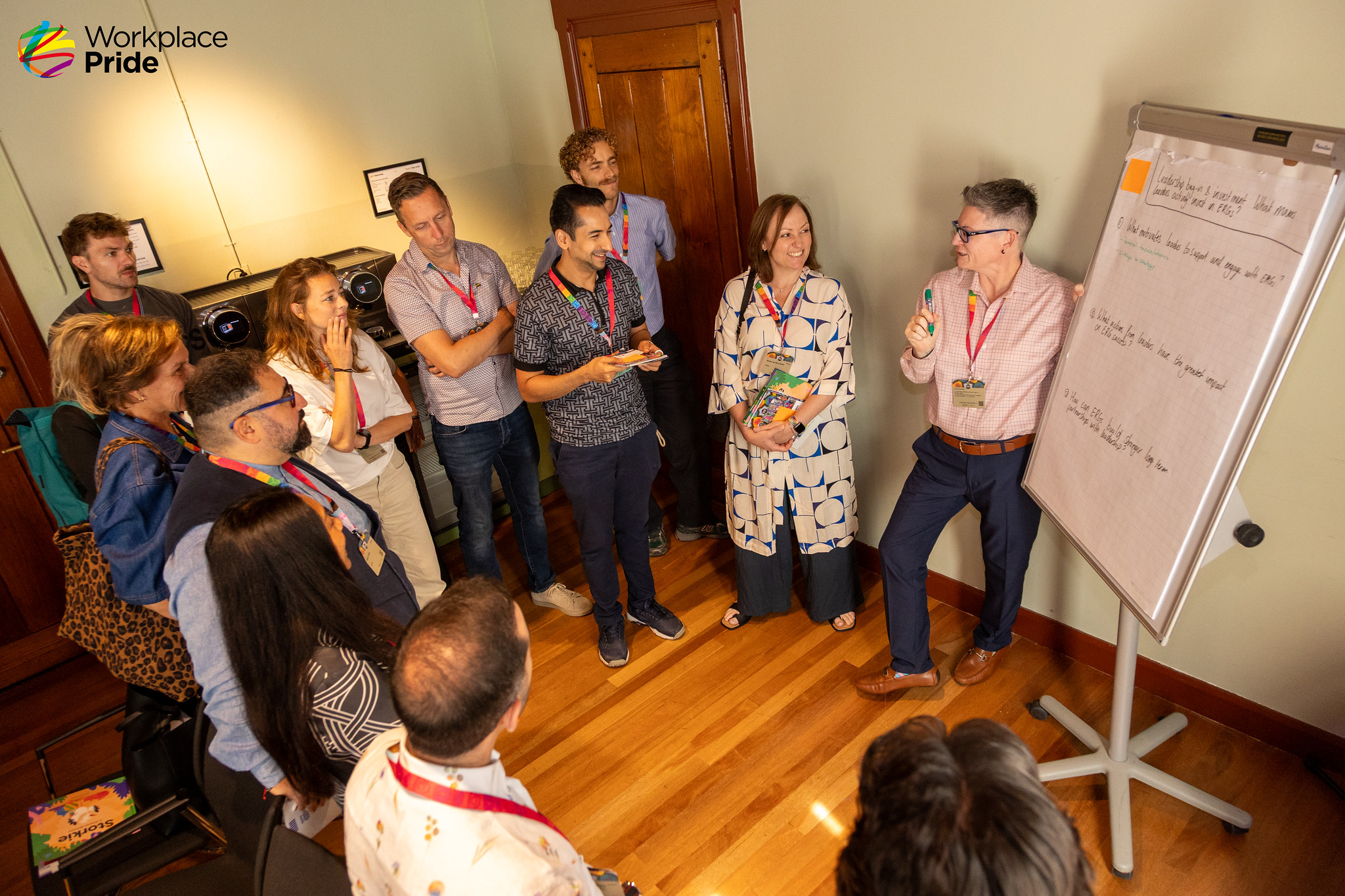
A central part of the programme was the interactive session, Co-designing Intersectional Inclusion: Community Voices and Policy Action, moderated by Alex Huang (Erasmus University Rotterdam) and Ingrid Mulder (Delft University of Technology).
Drawing on the Workplace Pride POC Vision Paper, participants explored how organisations can move beyond single-identity approaches to inclusion and better recognise the intersecting experiences of LGBTQ+ people of colour.
Through a facilitated World Café, researchers, professionals and community members exchanged perspectives on inclusive leadership, community voices and policy action. The session highlighted the importance of involving people with lived experience in shaping the policies and practices that affect their working lives, without placing the responsibility for change solely on marginalised communities.
The discussions reinforced an important principle: meaningful inclusion requires listening, collaboration and action that reflects the diversity of people’s experiences.
Ten years of research, impact and collaboration
The symposium also provided an opportunity to reflect on the achievements and wider impact of the Chair in LGBTIQ+ Workplace Inclusion over the past decade.
In his closing remarks, Michiel Kolman, Co-Chair of Workplace Pride, highlighted the Chair’s contribution across three areas: science, policy and society.
The figures illustrate the scale of this impact:
- 38 academic publications and more than 7,000 citations, contributing to the development of LGBTIQ+ workplace inclusion as an established and expanding research field.
- 91 policy documents referencing the Chair’s research across 16 countries, demonstrating its influence on policy development and institutional practice.
- A growing research legacy, including the supervision of 11 PhD candidates and the development of a wider academic community working on LGBTIQ+ workplace inclusion.
Beyond academia, the Chair’s research has informed practical resources for employers, contributed to initiatives such as the Netherlands Inclusivity Monitor, and reached wider audiences through industry engagement, executive education, media contributions and public debate.
These achievements reflect the Chair’s commitment to connecting scientific knowledge with organisational practice and translating research into meaningful action.
Looking ahead: Inclusion as a shared responsibility
Closing reflections from Leiden University’s leadership and Workplace Pride emphasised that, while significant progress has been made, there is still much work to do.
The discussions also raised important questions about academic freedom, freedom of speech and the responsibility of universities to create environments where everyone can participate without fear of discrimination or exclusion. They highlighted the importance of recognising that universities and workplaces are not neutral spaces, but environments shaped by values, structures and power dynamics.
Leiden University’s values of connection, innovation, responsibility and freedom provide an important foundation for this ongoing work. Meaningful freedom must include the ability to participate, contribute and be oneself without fear of exclusion.
The symposium also celebrated two important milestones for the partnership: ten years of the Chair and 20 years of Workplace Pride. Together, these anniversaries underline the value of sustained collaboration between academia, employers and communities.
Continuing the conversation
The symposium demonstrated what can be achieved when academic research, professional practice and community experience come together. It also highlighted the importance of supporting early-career researchers, embracing different research approaches and ensuring that the voices of marginalised communities are part of shaping the future of workplace inclusion.
A heartfelt thank you goes to all the speakers, researchers, participants and organisers who contributed to the day. Special thanks to Leiden University, Workplace Pride, Christine Holtkamp, Academia@Workplace Pride, POC@Workplace Pride and everyone who has supported the Chair over the past ten years.
Ten years of research and collaboration have brought us a long way, but the work is far from finished.
As we look ahead, our shared ambition remains clear: to continue challenging assumptions, building partnerships and translating knowledge into action, so that inclusion becomes a reality in people’s everyday working lives.