At Workplace Pride we hold regular member exchanges. These member exchanges are interactions, collaborations, and support networks established among members of Workplace Pride who share a commitment to promoting LGBTIQ+ inclusion in the workplace. These exchanges involve the sharing of knowledge, experiences, best practices, and resources related to fostering diversity, equity, and inclusion (DEI) in work environments.
Hope to see you there,
Christine, Yuli, Omar, Robert and Brian Relationship Managers
At Workplace Pride we hold regular member exchanges. These member exchanges are interactions, collaborations, and support networks established among members of Workplace Pride who share a commitment to promoting LGBTIQ+ inclusion in the workplace. These exchanges involve the sharing of knowledge, experiences, best practices, and resources related to fostering diversity, equity, and inclusion (DEI) in work environments.
Hope to see you there,
Christine, Yuli, Omar, Robert and Brian Relationship Managers
Major companies such as Citi, Meta, McDonald’s, and Goldman Sachs are reevaluating or scaling back their DEI commitments. This trend is influenced by political and judicial pressures, including a 2023 Supreme Court decision that has significant implications for human resources departments. CEOs are caught between potential legal challenges and the need to navigate a complex political landscape, leading to a cautious approach toward DEI policies.
In the next MEX, we will hear firsthand perspectives from Corporate America and those directly impacted by the recent shift – some may even call it a “rebranding” of DE&I. What changes are taking place in Corporate America? What are intersex, transgender, and non-binary individuals experiencing in the workplace?
Where we want to land in this webinar.
DE&I is Being Reframed, Not Eliminated
Some companies are shifting their language and positioning DE&I within broader business objectives (e.g., “inclusive leadership” or “belonging”) to maintain momentum while avoiding political backlash.
Business Case for DE&I Remains Strong
Despite challenges, organizations recognize that diverse teams drive innovation, employee engagement, and business success. Many are embedding DE&I into their core strategy rather than treating it as a standalone initiative.
Leadership and Accountability Are Crucial
Companies should focus on equipping leaders with inclusive leadership skills, ensuring they champion equity and foster psychological safety within teams.
Questions for panellists:
What alternative terms or approaches are organizations using to keep DE&I efforts going?
How can companies ensure DE&I remains a core business strategy or can they?
How are companies adapting their DE&I programs in response to changes in affirmative action policies and state-level restrictions?
How can organizations equip managers and executives with the skills to foster inclusive workplaces?
How can employee resource groups (ERGs) continue to drive impact in today’s evolving corporate environment?
Hope to see you there,
Christine, Yuli, Omar, Robert and Brian Relationship Managers
Pictured L-R: Numan (he/him) – Malaysia, Akira (she/her) – Japan, Adhil (he/him) – Sri Lanka, Rohin (he/him, they/them) – India, Deborah Abrahams (she/her) – Public Speaking Coach, Building Bridges Program, Bella Aubree (she/her) – Indonesia, Mominul (he/she/they, him/her/them) – Bangladesh
Amsterdam, August 2, 2024 – The Rijksmuseum hosted the 6th “Stories from the Heart” event. Organised by Workplace Pride in collaboration with the RVO and the Netherlands Ministry of Foreign Affairs, the event showcased powerful narratives from LGBTIQ+ activists worldwide. These activists, part of the RVO’s “Building Bridges” program, shared their poignant experiences with an audience that included many Workplace Pride members, some of whom work in the same regions.
The event’s speakers highlighted the unique challenges and triumphs they faced in their respective countries, emphasizing the need for inclusive policies and ongoing advocacy. The event was opened by David Pollard, Executive Director of Workplace Pride, alongside Yakunu van Santen (he/him), Public Affairs at the Rijksmuseum, Gerrie Willems (she/her), Deputy Director of the Asia and Oceania Department at the Ministry of Foreign Affairs, and Deborah Abrahams (she/her), Public Speaking Coach for the Building Bridges Program.
Moon, a non-binary LGBTQIA+ rights activist and founder of Prantoz Foundation, shared their journey from a conservative Sunni Muslim family to becoming a resilient advocate for marginalised communities. Despite familial rejection, Moon has tirelessly championed LGBTQIA+ rights and queer ecology.
🔸 Rohin (he/him, they/them) – India
A queer, non-binary lawyer, Rohin has played a crucial role in advocating for marriage equality and inclusivity within the Indian judiciary. Their efforts have led to significant changes, including the installation of gender-neutral bathrooms in the Supreme Court and expanded sexual harassment policies.
🔸 Bella Aubree (she/her) – Indonesia
Bella, a young transgender activist and National Coordinator of Inti Muda Indonesia, has been advocating for HIV/AIDS awareness and LGBTQIA+ rights since the age of 15. Her work focuses on spreading awareness and influencing policy changes to support young people living with HIV.
🔸 Akira (she/her) – Japan
As Deputy Secretary General of Japan Alliance for LGBT Legislation (J-ALL), Akira has been instrumental in the passage of Japan’s LGBTQ+ Awareness law and continues to fight for anti-discrimination legislation and greater social acceptance.
🔸 Adhil (he/him) – Sri Lanka
A feminist and human rights advocate, Adhil has been at the forefront of challenging colonial laws that adversely affect the LGBTIQ+ community in Sri Lanka. As Executive Director of Equite Sri Lanka, he is committed to decriminalisation efforts and raising awareness among authorities.
🔸 Numan (he/him) – Malaysia
Founder of JEJAKA Kuala Lumpur, Numan has significantly expanded the organization, supporting over 10,000 community members through various initiatives. His advocacy work encompasses strategic community engagement and global equality projects.
By sharing their firsthand experiences, the activists offered a profound insight into the local landscapes, cultures, and challenges faced by LGBTIQ+ individuals in their regions. This exchange of perspectives aimed to foster greater empathy and cultural awareness among Workplace Pride members, enhancing their ability to support colleagues and advocate for inclusivity on a global scale.
The “Stories from the Heart” event emphasised the crucial need for ongoing advocacy and inclusive policies. It aimed to create a world where everyone, regardless of gender or sexual orientation, can live with dignity and respect. The shared stories highlighted the resilience and determination of LGBTIQ+ activists and served as a powerful call to action for continued support and solidarity.
People who are attracted to more than one gender, such as bisexuals, in many ways have worse experiences at work than their heterosexual, gay or lesbian colleagues. But even policies to protect lhbtiq+’s unintentionally exclude this group. What could be better?
The Pride March in Amsterdam. Image Joris van Gennip / de Volkskrant
The largest group under the lgbtiq+ umbrella does not consist of people who are attracted to the same sex, but people who are attracted to more than one gender. There are people who are attracted to men and women, or people who are attracted to people regardless of gender. They call themselves pansexual, bisexual, or queer, or prefer not to label themselves at all. But to denote an orientation that does not focus only on one gender, the broad term bi+ can be used.
Leiden University and Bi+ Netherlands conducted an exploration on this group at the request of the Ministry of Education, Culture and Science and the conclusions are worrying. In the workplace, bi+ people have worse experiences on many levels than people who are attracted to one gender, whether heterosexual, lesbian or gay. This can range from nasty jokes to bullying, and from unwanted sexual attention to even physical violence.
Compared to lesbian and gay people, bi+ people are much less likely to be open about their sexual orientation – 50 per cent and 26 per cent of bi+ women and men, respectively, compared to 98 per cent and 88 per cent of lesbian women and gay men, respectively. This starts as early as the application process, as they expect a lack of acceptance. These fears are not unjustified: lhbtiq+ and therefore bi+ candidates are more often rejected and seen as less competent than other candidates. A common explanation is that they ‘do not fit within the organisation’.
About the authors
Jojanneke van der Toorn is associate professor of lgbtiq+ workplace inclusion at Leiden University and also works at Utrecht University. Michiel Kolman is senior vice president Elsevier and co-chair of Workplace Pride.
Heteroprofessionalism
The implicit but dominant norm is that only heterosexuality is seen as professional and neutral (heteroprofessionalism). On top of this is the monosexual norm, which considers only sexual orientations that focus exclusively on one gender normal or credible. Bi+ people thus fall outside both the heterosexual norm and the monosexual norm.
The monosexual norm contributes to a sense of invisibility among bi+ people. If you talk about your opposite-sex partner at a working lunch, colleagues automatically assume you are heterosexual. When it comes to a same-sex partner, the assumption is that you are gay or lesbian. The survey shows that bi+ employees do not feel recognised and that there is a lack of understanding in the workplace. In addition, prejudices about bi+ also play a negative role: for instance, bisexuality is more associated with sex than heterosexuality, which is eminently at odds with professionalism.
Many employers take a blanket approach to promoting lgbtiq+ inclusion or focus mainly on gay or lesbian employees. The exploration shows that this is insufficient for bi+ employees and a more targeted approach is needed.
Other orientations
Employers would do well to establish a social norm that is not based on heterosexuality and homosexuality alone. For instance, it is important to explicitly mention bi+ orientations alongside other orientations in HR policy, diversity and inclusion policy and communication, or use more inclusive formulations such as ‘regardless of sexual orientation’. Organisations committed to bi+ and lgbtiq+ inclusion in the workplace can also play a positive role. They facilitate self-scans for organisations, to make visible where policy adjustments are possible and desirable.
The government also has a role to play. The General Equal Treatment Act (AWGB) already offers protection to heterosexual, gay, lesbian, transgender and intersex people who experience discrimination in the labour market. With a minor amendment, this law can offer the same protection to bi+ people.
Government and business have a joint mission and Pride Amsterdam is the moment to adjust ambitions. For a truly inclusive labour market, specific attention is needed for all individual letters of the acronym, especially the b of bi+. #WorkplacePride #BiPlusVisibility #InclusiveWorkplaces #BreakMonosexualNorms #SupportBiPlus #LGBTIQEquality #EndHeteroprofessionalism
A huge thank you to everyone who took part in this year’s Pride March on July 27th! Your enthusiasm and support made it a truly unforgettable day.
A special shoutout to our amazing volunteers—your hard work and dedication were invaluable, and we couldn’t have done it without you.
We started the day with a fantastic Pre-March Reception at the Workplace Pride Office, enjoying coffee, tea, and mimosas. It was the perfect way to kick off our celebrations!
The march from Amstelveld was vibrant and full of energy, especially with Unidos de Amsterdam’s sizzling Samba music adding to the festive atmosphere. Together, we celebrated diversity and inclusion in the heart of Amsterdam.
Thank you for standing with us and making a powerful statement for equality. See you at the next event!
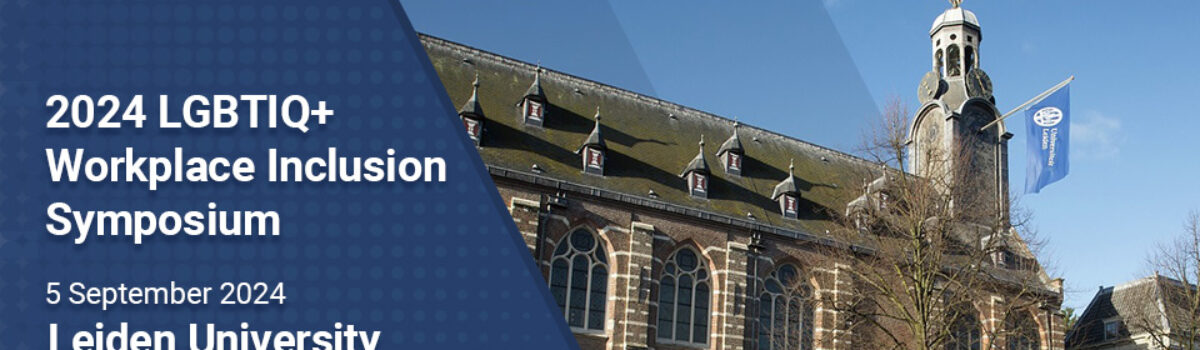
Unlock the power of inclusivity at this year’s LGBTIQ+ Workplace Inclusion Symposium. Join us for keynote presentations by Dr. Erin Cech (University of Michigan, USA) and Prof. Dr. Jojanneke van der Toorn (Leiden University, NL), who will delve into the latest cutting-edge research on LGBTIQ+ inclusion.
2024LGBTIQ+ Workplace Inclusion Symposium Unlock the power of inclusivity at this year’s LGBTIQ+ Workplace Inclusion Symposium, featuring keynote presentations by dr. Erin Cech (University of Michigan, USA) and Prof.dr. Jojanneke van der Toorn (Leiden University, NL) delving into the latest cutting-edge research on LGBTIQ+ inclusion. A panel including researchers and D&I professionals from the public and private sector will furthermore reflect on the research findings and recommendations, and share concrete examples of how organizations can build inclusive environments. Connect with fellow attendees over coffee and tea, fostering meaningful relationships with like-minded individuals committed to driving positive change in their respective organizations. Join us in this critical dialogue to make a difference and foster a workplace where everyone can belong and bring their authentic selves.
The event is in-person but will be streamed and recorded for those not able to attend. Please register using the registration form.
Organisers
This event is organised by Jojanneke van der Toorn in collaboration with Academia@WorkplacePride. We can be contacted at lgbtqi.inclusion@gmail.com
Accessibility
We would like the symposium to be accessible to everyone. We hope the absence of a participation fee and the possibility to view a live stream contribute to this. Please note that the symposium location is wheelchair accessible. We will make sure to ask the speakers to articulate clearly. We very much welcome your suggestions for how we can be more inclusive.
Program
10:00-10:30 Doors open and registration 10:30-12:00 Symposium
Welcome Michiel Kolman, Senior Vice President at Elsevier and Co-chair of Workplace Pride. Jojanneke van der Toorn, Professor of LGBTIQ+ Workplace Inclusion at Leiden University
The contours and contexts of LGBTIQ+ workforce inequality and how to confront them Dr. Erin Cech, Associate Professor of Sociology at the University of Michigan, USA
To be professional is to be straight?: Heteroprofessionalism at Work Prof.dr. Jojanneke van der Toorn, Professor of LGBTIQ+ Workplace Inclusion at Leiden University
Reflections and illustrations from the field Panel discussion, moderated by Kshitij Mor, PhD candidate at Utrecht University[MOU1]
Closing and presentation of the Academia@Workplace Pride program for the academic year 2024/2025 Michiel Kolman, Senior Vice President at Elsevier and Co-chair of Workplace Pride
12.00-13.00 Coffee and Tea
The contours and contexts of LGBTIQ+ workforce inequality and how to confront them
Dr. Erin Cech (Department of Sociology at the University of Michigan)
How does LGBTIQ+ inequality manifest in the workforce? This talk will begin with an overview of the various ways this inequality can show up: disadvantages can emerge not only in feelings of social marginalization, but in a lack of professional respect and opportunities and even negative health and wellness outcomes. I discuss the kinds of work contexts that can amplify or undermine these inequalities, using the science and tech sector as a case. I end by discussing the cultural “rhetorics of resistance” that employees and organization leaders sometimes use to block LGBTIQ+-inclusive diversification efforts and strategies for confronting those rhetorics.
To be professional is to be straight?: Heteroprofessionalism at work
Prof.dr. Jojanneke van der Toorn (Institute of Psychology at Leiden University)
This talk explores the intricate dynamics of heteroprofessionalism in the workplace, focusing on the repercussions of possessing and disclosing an LGBTIQ+ identity on employees’ well-being and career trajectories. It delves into how disclosing a queer identity can be a double-edged sword, with disclosure perceived as unprofessional while concealment is seen as dishonest. The talk also addresses the diverse experiences within different subgroups of the LGBTIQ+ community, underscoring the complex challenges faced by LGBTIQ+ individuals in professional settings, and advocates for inclusive organizational policies that support authenticity and professional equality for LGBTIQ+ employees.
“For us to solve these deeply culturally entrenched problems, we have to restructure the very idea of what it means to be a professional”– Dr. Erin Cech (University of Michigan)
This quote nicely summarises the key message of last week’s LGBTIQ+ Workplace Inclusion Symposium at Leiden University, marking the opening of the Academia@WorkplacePride year.
The symposium was opened by Michiel Kolman , Workplace Pride co-chair and Academia@WorkplacePride Lead who highlighted the increasing importance of bridging science and practice given the worrying trends in lgbtiq+ acceptance near and far.
In her keynote, Erin A. Cech provided an overview of the various ways that LGBTIQ+ inequality can show up in the workplace: disadvantages can emerge not only in feelings of social marginalisation, but in a lack of professional respect and opportunities and even negative health and wellness outcomes. She discussed the kinds of work contexts that can amplify or undermine these inequalities, using the science and tech sector as a case, and ended by discussing the cultural “rhetorics of resistance” that employees and organisation leaders sometimes use to block LGBTIQ+-inclusive diversification efforts and strategies for confronting those rhetorics.
In my keynote, I further discussed the implications of heteronormativity at work by discussing the concept of heteroprofessionalism, or the norm that to be professional is to be cisgender and straight. I presented recent research findings demonstrating how disclosing a queer identity can be a double-edged sword, with disclosure perceived as unprofessional while concealment is seen as dishonest. I also addressed the specific challenges experienced bi+ employees, and what can be done to mitigate these.
Many thanks to the audience for participating in the symposium, the speakers, moderator, and panelists for sharing their insights, and Christine Holtkamp, Chenhao Zhou and Paula Hoffmann for their tireless efforts behind the scenes towards making the symposium a success!
On behalf of Leiden University, Workplace Pride, and the organising team,
Amsterdam, 27 June 2024 — Workplace Pride is delighted to announce the release of the 2024 Global Benchmark results, a comprehensive global assessment of LGBTIQ+ workplace inclusion. This year’s findings spotlight the remarkable achievements of organisations dedicated to fostering diverse, inclusive environments.
Foremost among the accolades are the organisations that have scored above 90% on the Workplace Pride Global Benchmark survey, earning the title of “Advocate.” These trailblazing organisations are leading the charge in advancing LGBTIQ+ inclusion in workplaces worldwide, setting new standards for broader societal change. This year, there are two new entries into the Advocate level: ING and McKinsey & Company. They join established Advocate organisations from previous years, including: Accenture, Dow Inc., PwC, RELX Elsevier, Shell, Sodexo,and Unilever.
We also extend our congratulations to the “Ambassador” organisations, which have scored between 70% and 90%. Their unwavering commitment to LGBTIQ+ inclusion in the workplace is driving positive change and fostering a more inclusive society. This year, six new entries have achieved Ambassador status: De Nederlandsche Bank, Johnson & Johnson, Kite Pharma EU B.V., Lenovo, Ministerie van Buitenlandse Zaken, and Nike.They join established Ambassador organisations from previous years, including Aegon Ltd., Avery Dennison, and KLM.
The 2024 Global Benchmark results reveal a significant shift, with 26% of submissions coming from first-time participants—the highest percentage since the benchmark commenced. David Pollard, Executive Director of Workplace Pride, remarked, “The 2024 Global Benchmark highlights how organisations worldwide are responding to societal changes and uncertainties. The influx of first-time participants underscores a growing commitment to fostering inclusive environments. These employers are not only driving change within their own workplaces but are also influencing broader societal transformations on a global scale.”
We celebrate the progress made by organisations that have shown the most significant improvement in LGBTIQ+ workplace inclusion over the past year. Their efforts are a testament to the evolving landscape of workplace diversity and inclusion, and their achievements pave the way for continued progress.
The Workplace Pride Global Benchmark was initially introduced in 2014 as an annual survey, enabling participants to track their progress. Developed under the leadership of Workplace Pride, with support from the University of Leiden, major employers, and NGOs from various countries, the Benchmark represents the gold standard of LGBTIQ+ workplace inclusion worldwide. It empowers management with the data needed to measure and enhance LGBTIQ+ workplace inclusion in their organisations across the globe.
Participating organisations receive a comprehensive assessment across eight key categories: Policy & Communication, Employee Networks, Workplace Awareness, Support & Benefits, Inclusion & Engagement, Expertise & Monitoring, Business & Supplier Engagement,and Societal Impact.
Omar Badawy (He/Him) introduces the People of Colour (PoC) Community during the conference.
On Friday, June 14, 2024, The Hague, Netherlands, hosted the highly anticipated 2024 International Conference “The Future We Choose: Practical Steps and Global Perspectives.” With over 300 delegates, 22 hours of content, 14 breakouts, and countless hours of networking, this conference marked one of the past year’s most successful and meticulously planned events.
The conference was a convergence of voices, ideas, and unwavering commitment to shaping a more inclusive future. Highlights included:
The launch of the new People of Colour community.
The welcoming of new Advisory Board member Lisa van Ginneken.
The creation of a dedicated quiet zone for delegates to recharge.
Rob Jetten (He/Him), Minister for Climate and Energy and Deputy Prime Minister of the Netherlands, delivers his keynote address.
Executive Director of Workplace Pride, David Pollard encapsulated the conference’s spirit, saying, “Our community is incredibly diverse and wonderful. We can achieve great things, but finding balance is required. We must listen to all perspectives and strive for a middle ground. Today, we are actively shaping our future. This is The Future We Choose.”
The conference buzzed with energy and purpose, drawing diverse participants from business, government, and civil society. It catalysed change, fostering connections and igniting ideas with the potential to ripple far beyond the conference walls. Keynote addresses by leaders such as Rob Jetten: Minister for Climate and Energy / Deputy Prime Minister of The Netherlands, highlighted the challenges and triumphs of LGBTIQ+ inclusion, sharing personal stories that underscored the need for courage and empowerment.
Siobhán Martin, PhD, Global Executive, NED, & Driver of Cultural Change, at Aegon emphasised, the importance of securing sponsorship at the highest levels and promoting active allyship. “Be Bold. Be Courageous,” she urged, advocating for efforts that go beyond the status quo to push boundaries and foster true equity and belonging for everyone.
Pictured left to right: Michiel Kolman (He/Him), Siri Nomme (She/Her), H.E. Ambassador Asi Mamanee (He/Him), Margot Slattery (She/Her), and Boris Dittrich (He/Him) during the panel discussion “The Challenging Global Landscape: Public & Private Sector in the Crosshairs.”
The first-panel discussion, led by Michiel Kolman, Co-Chair of Workplace Pride, titled “The Challenging Global Landscape: Public & Private Sector in the Crosshairs,” featured lively debates and reflections on significant milestones, such as the 9th anniversary of marriage equality in Ireland and Thailand’s commitment to LGBTIQ+ rights. Thailand’s example was highlighted as a potential model for other Asian countries to follow.
Throughout the day, 14 breakout sessions explored topics such as Rainbow Washing, Transgender Inclusion & Safety in the Workplace, Impactful Strategies for Bi+ Inclusion at Work, Neurodiversity in Pride, creating environments where diversity and inclusion are living values, and the importance of bold leadership. Rachel Solway, Chief HR & Corporate Officer at Shell, highlighted the importance of addressing invisible barriers to achieving true workplace inclusion. Her message resonated deeply, underscoring the necessity for workplaces and multinationals to stand together and learn from each other to foster a genuinely inclusive environment.
Workplace Pride launched the People of Colour community, spearheaded by Christine Holtkamp, Director of Communities at Workplace Pride, and Omar Badawy, Relationship Manager at Workplace Pride. The new community leaders, Tamer Zikry from CSC and Dr. Ajay Jagadeesh from TU Delft, outlined their goals and expressed their enthusiasm for their first event. Omar, reflecting on his journey, emphasised the importance of creating a safe space for discussions on race and ethnicity, addressing issues like racism and ethnic profiling.
This year’s conference also saw a shift in how speakers and moderators were appreciated. Instead of traditional gifts, David Pollard presented a generous donation from Workplace Pride to Edith Molemans and Frank Aalderinks from the Give a Damn Foundation which supports LGBTIQ+ organisations worldwide.
As the conference drew to a close, reflections echoed through the main plenary room. Conversations about self-identification and the business case for diversity were punctuated by introspection. The Quiet Zone, a new addition this year, offered a sanctuary for those needing a break from the vibrant atmosphere, showcasing Workplace Pride’s commitment to inclusivity.
Lisa van Ginneken (She/Her) Advisory Board Member, Moderates her Breakout on ‘Transgender Inclusion & Safety in the Workplace’ during the Workplace Pride Conference.
With over 3 billion people expected to vote in 2024 and 2025, the future holds significant potential for change. The conference emphasised the importance of resilience and collective effort in shaping The Future We Choose—a future where everyone feels seen, heard, and valued.Thank you, Ikenna Azuike, for moderating the conference and to the staff, board, volunteers, and everyone who attended. We look forward to seeing you next year. For now, feel free to browse through the photos and recap the full opening and closing plenaries available online. See you next year!
You are invited to the 2024 2nd Quarter meeting of the Global Leaders Council (GLC)
The GLC is an online quarterly forum in which Workplace Pride members can have a high-level discussion on strategic topics important to LGBTIQ+ inclusion in the workplace. GLC participants should be decision-makers or major influencers within their own organisations.
An agenda will be available closer to the meeting. Workplace Pride is inviting you to a scheduled Zoom meeting.
This website uses cookies to improve your experience. We'll assume you're ok with this, but you can opt-out if you wish. Cookie settingsACCEPT
Privacy & Cookies Policy
Privacy Overview
This website uses cookies to improve your experience while you navigate through the website. Out of these cookies, the cookies that are categorized as necessary are stored on your browser as they are essential for the working of basic functionalities of the website. We also use third-party cookies that help us analyze and understand how you use this website. These cookies will be stored in your browser only with your consent. You also have the option to opt-out of these cookies. But opting out of some of these cookies may have an effect on your browsing experience.
Necessary cookies are absolutely essential for the website to function properly. This category only includes cookies that ensures basic functionalities and security features of the website. These cookies do not store any personal information.
Any cookies that may not be particularly necessary for the website to function and is used specifically to collect user personal data via analytics, ads, other embedded contents are termed as non-necessary cookies. It is mandatory to procure user consent prior to running these cookies on your website.