
The Rainbow Brief: From Resistance to Gain

While societal attitudes toward diversity, equity, and inclusion appear increasingly polarized, our research led by Yonn Bokern shows that employees are not simply for or against their organization’s DEI policies. Instead, we identify distinct profiles of support, each driven by different motivations. The challenge, therefore, is not merely to overcome resistance, but to work with it—by listening, engaging, and better understanding the conditions that foster meaningful engagement with D&I policies.
The handout From Resistance to Gain (available in Dutch and English) summarises our research and offers practical advice to better understand support, hesitation and resistance and how to effectively deal with it.
Most important insights:
1. Support is more than for or against. Not everyone is distinct champion or opponent. There are also ambivalent employees, reluctants and bystanders.
2. Resistance often is not refusal. The group which is truly against D&I policy, is smaller than expected. More often, it involves unfamiliarity, insecurity or critical questions.
3. Managers are crucial. They typically see themselves as champion or reluctant: convinced of the importance of D&I, but sometimes critical on the execution. Their attitude and behavior strongly influence how inclusive employees experience their working environment.
4. Increase support by understanding profiles. Adjust your approach to your target group: appreciate champions, utilize the critical views of reluctants, inform ambivalents, activate bystanders and enter into dialogue with opponents.
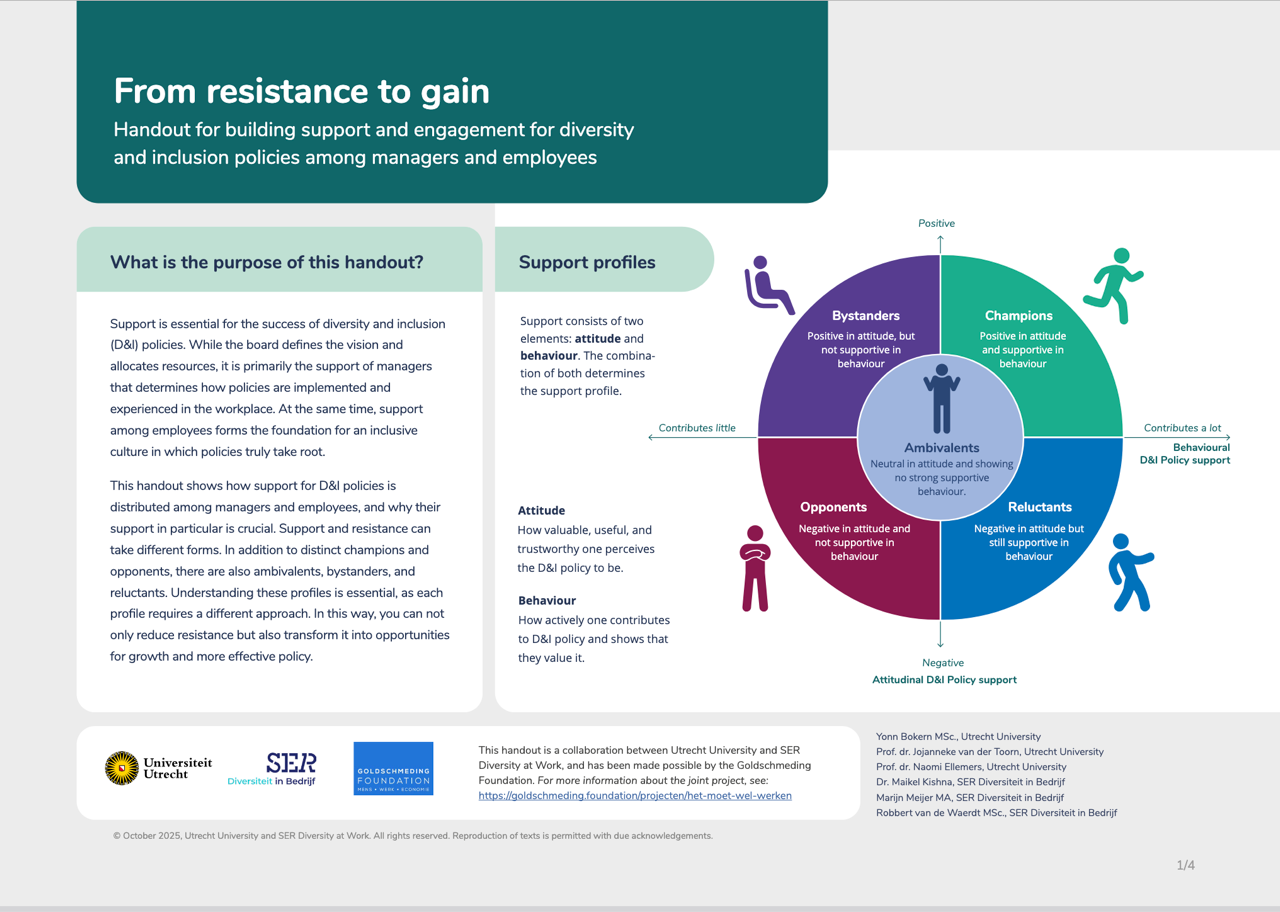
The handout is part of the multiannual project Het moet wel werken, a collaboration between Utrecht University, SER Diversity at work and the Netherlands Inclusivity Monitor, made possible by the Goldschmeding Foundation.
The Rainbow Brief: Academic Insights on LGBTIQ+ Workplace Inclusion

As Professor of LGBTIQ+ Workplace Inclusion at Leiden University, Jojanneke van der Toorn collaborates closely with Workplace Pride to bridge academic research and organisational practice. Together, they advance evidence-based strategies that foster more inclusive, equitable, and psychologically safe workplaces for LGBTIQ+ individuals globally.
Reflections on SOGI Collection
When does it feel safe to share who you are at work?
Jojanneke’s interdisciplinary team explored employees’ perspectives on organizational data collection related to sexual orientation and gender identity (SOGI). Unlike previous research that focused on organisational motives, this study examined employee experiences—under what conditions individuals feel safe or reluctant to disclose personal identity aspects.
Key takeaway: Thoughtful, voluntary, and transparent SOGI data practices support inclusion—but only when trust, anonymity, and relevance are prioritised.
Recommendations for HR and DEI Teams:
- Start with Purpose & Transparency – Communicate why data is collected and how it fosters inclusion.
- Design for Trust – Involve LGBTQ+ employees and ERGs in the process.
- Ensure Anonymity & Security – Use anonymous submission tools and protect access.
- Keep Disclosure Voluntary – Avoid coercion; respect non-disclosure.
- Adopt an Intersectional Lens – Recognize multiple dimensions of identity.
- Pilot, Listen, Adapt – Use feedback loops to refine approaches.

More Biased, Yet More Informed?
Jojanneke, alongside Erdem Ozan Meral and Corinne Moss-Racusin, explored whether perceptions of bias and expertise differ depending on whether you belong to the marginalized group you study. Their findings shed light on the mechanisms behind these perceptions.
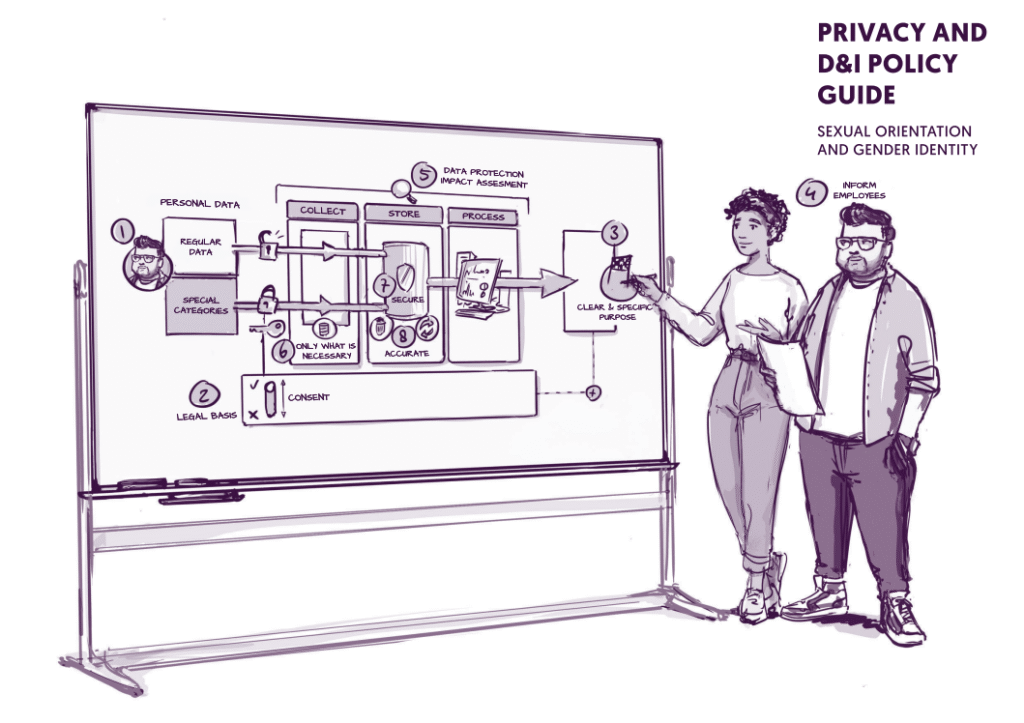
The Privacy and Inclusion (P.INC) project group of the Utrecht Young Academy has, in collaboration with Workplace Pride, set up a guide for D&I officers. In this guide, they can find an overview of the most important rules regarding the collection of information about the sexual orientation and gender identity of employees.
Staying the Course in a Shifting DEI Landscape
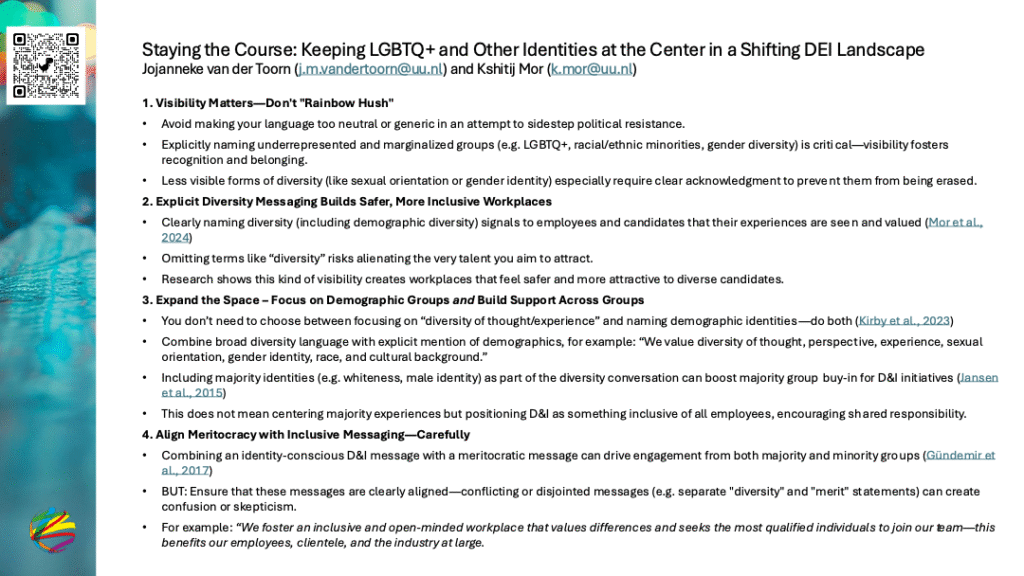
At this year’s Workplace Pride Conference at KIT Amsterdam, Jojanneke co-led a session with Kshitij Mor: “Staying the Course: Keeping LGBTQ+ and Other Identities at the Center in a Shifting DEI Landscape”. The session emphasised the importance of keeping identity central in DEI messaging to sustain meaningful diversity efforts.
Actionable takeaways include:
- Embed identity-focused practices in DEI strategies.
- Use research insights to guide organisational messaging.
Monitor and adapt approaches to maintain long-term inclusivity.
Upcoming Event: 2025 LGBTIQ+ Workplace Inclusion Symposium
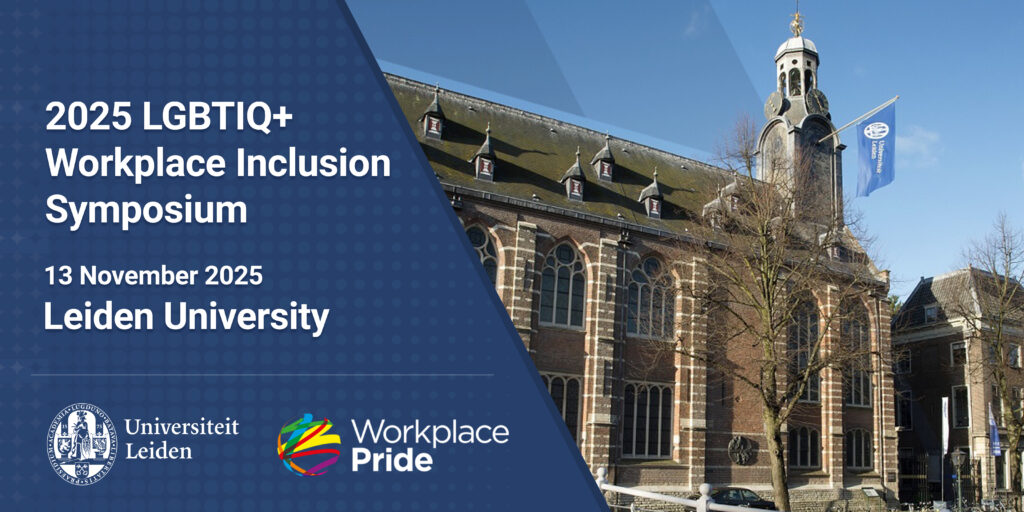
Date: 13 November, 2025
Location: Leiden University
Join researchers and D&I professionals at this year’s symposium to explore the latest in LGBTIQ+ workplace inclusion research. Highlights include:
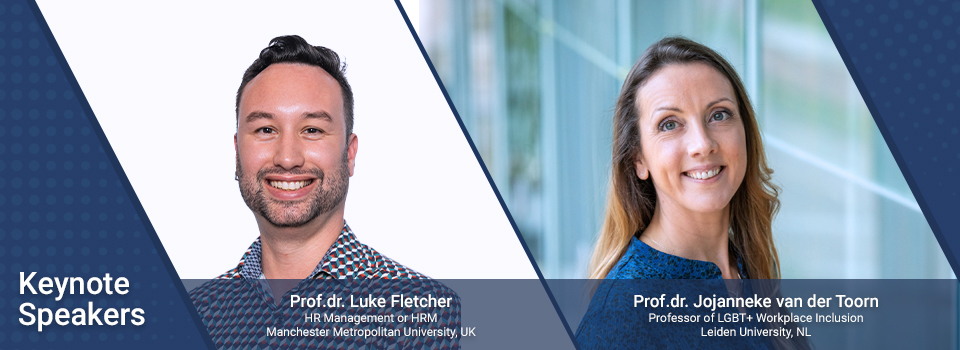
- Keynote presentations by Prof. Luke Fletcher (Manchester Metropolitan University) and Prof. Jojanneke van der Toorn.
- Panels featuring researchers and D&I leaders from public and private sectors.
- Networking opportunities over coffee and tea with like-minded professionals.
Stay tuned for details to secure your place in this critical dialogue.
Why Jojanneke’s Work Matters
- Bridges research and practice to drive measurable workplace inclusion.
- Provides evidence-based guidance for HR and DEI teams.
Elevates employee experiences, trust, and psychological safety in organisational policy.